1958 · BEFORE THE COIN
Born in a lab
The first crowd-pleaser was tennis on an oscilloscope, built for a physics lab’s visitors’ day.
Meet Tennis for Two doodlearcade
Start
A SHORT HISTORY OF THE ARCADE
How a lab open day became a multi-billion coin habit.
In 1958 a physicist wired a tennis game to an oscilloscope. Twenty-two years later, a yellow maze-runner was on its way to earning billions, a quarter at a time. Here is how the arcade happened, in plain English, with every fact sourced.
Plain English, with the sources linked.
PLAYER 2press start
Open the time machineKeep in mind
THE SHORT STORY
Video games were born in labs and universities,
then paid their way in bars and arcades.
1958 · BEFORE THE COIN
The first crowd-pleaser was tennis on an oscilloscope, built for a physics lab’s visitors’ day.
Meet Tennis for Two1971–1972 · THE COIN SLOT
Galaxy Game, Computer Space and Pong turned computer games into a business you paid for by the play.
Travel through the years1978–1982 · THE GOLDEN AGE
Space Invaders and Pac-Man made the arcade a worldwide habit, and some very big numbers.
See the numbersTHE ARCADE TIME MACHINE
Five moments that shaped the arcade, from a five-inch lab screen to the highest-grossing arcade game on record.
Dates and details come from the American Physical Society, Guinness World Records and The Strong National Museum of Play. Sources are listed below.
TWO RECORDS WORTH KNOWING
The golden age in two numbers,
both from Guinness World Records.
$3.5bn
Estimated earnings, 1980 to 1999
The highest-grossing arcade video game on record. Roughly 10 billion plays at 25 cents account for about $2.5 billion; sales of the cabinets themselves add about $1 billion.
PAC-MAN · 1980
125,000
Cabinets sold by 1988
The sequel, made in the United States by Bally/Midway, became the most successful US-made arcade machine, selling 125,000 cabinets in six years.
MS. PAC-MAN · 1982
Both figures are record-book estimates, not audited accounts, but they show how a game priced in small change could become one of the biggest earners in entertainment.
PLAY IT TODAY
Step 1
Galaxy Game and Pong were built for two. Many classic cabinets are at their best side by side, not solo.
Step 2
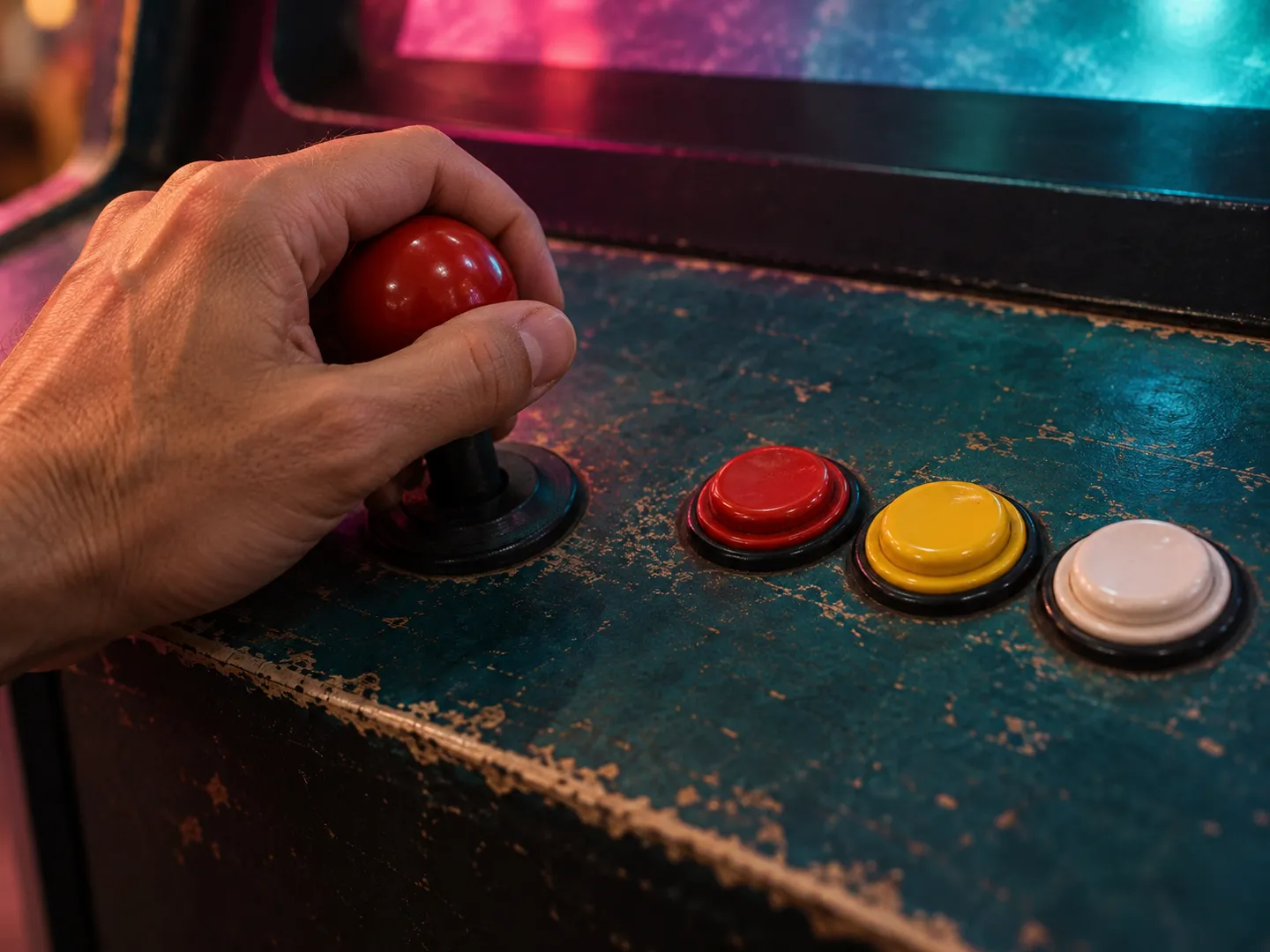
Knobs, buttons, joysticks: the controls tell you a lot about when a cabinet was made and why some games caught on faster than others.
Step 3
Some museums and preserved arcades keep vintage machines working. Check what is playable before you travel.
Step 4
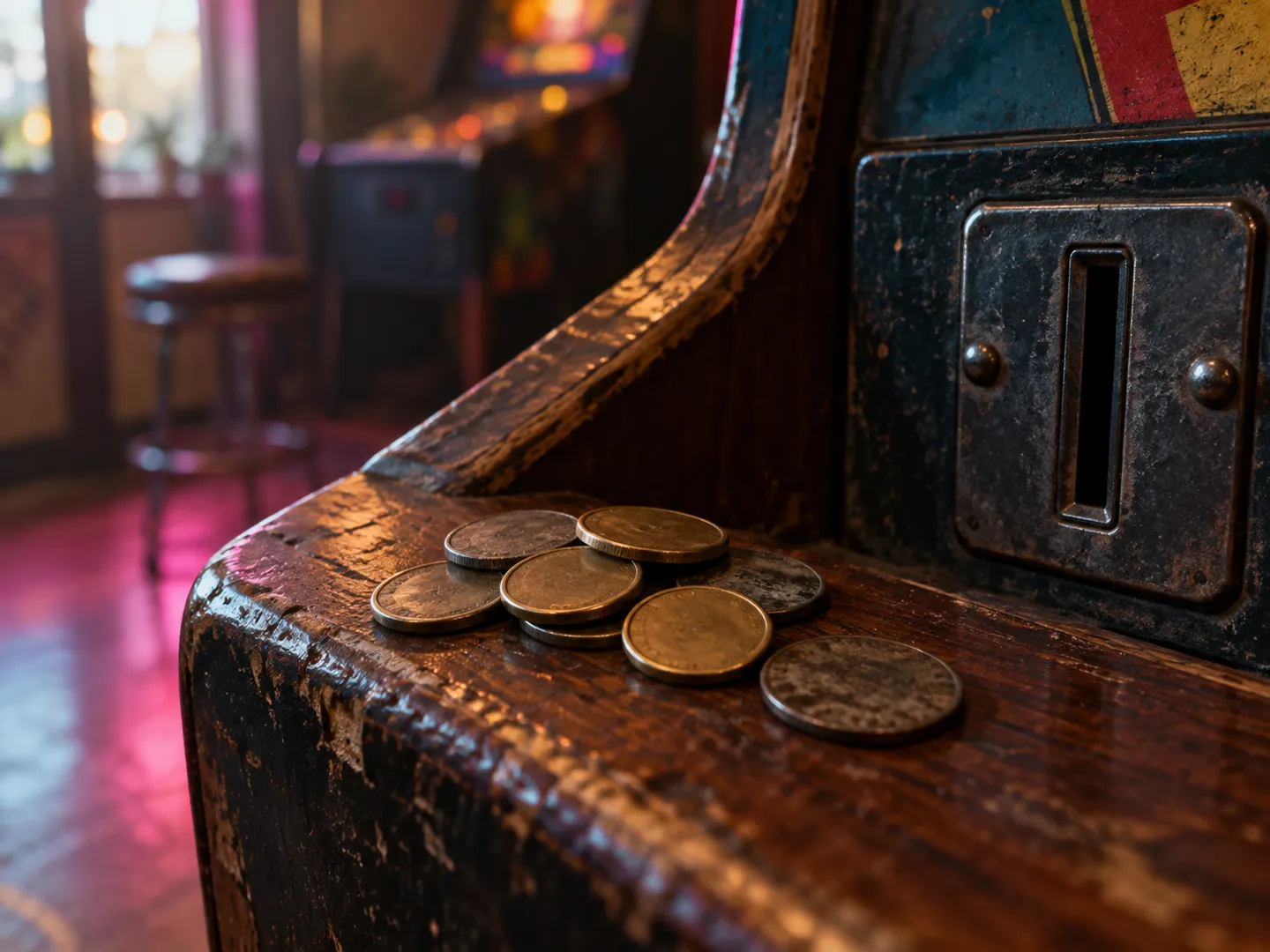
Small change goes quickly. Pac-Man’s billions came from one play at a time, so set a limit before the first credit.
ARCADE FACTS
In October 1958, William Higinbotham showed Tennis for Two at Brookhaven National Laboratory’s visitors’ day. It ran on a small analogue computer with a five-inch oscilloscope screen and became the most popular exhibit.
In 1971 Galaxy Game, a version of the 1962 mainframe game Spacewar!, was installed in the coffee house of Stanford’s student union. It is recorded as the first two-player coin-operated arcade game.
Computer Space, created in 1971 by Nolan Bushnell and Ted Dabney, was also inspired by Spacewar!. Its complex controls limited its commercial success.
Atari’s Pong arrived in 1972 with two knobs and a single instruction: “Avoid missing ball for high score.” Simplicity was the point.
New York, Los Angeles and Chicago banned pinball machines in 1942. New York held out until 1976, which Guinness World Records lists as the longest ban in gaming history.
QUICK QUESTIONS
Short answers to the questions people ask most.
It depends on the definition. One of the earliest was Tennis for Two, shown at Brookhaven National Laboratory’s visitors’ day in October 1958 on a five-inch oscilloscope screen. The first coin-operated video games arrived in 1971.
Two games date from 1971. Galaxy Game, installed at Stanford University and charging ten cents a play, is recorded as the first two-player coin-operated arcade game. Computer Space, also from 1971, was inspired by the same mainframe game, Spacewar!, but its complex controls limited its success.
Atari released Pong in 1972. It had two knobs and a single instruction: avoid missing the ball for a high score. The Strong National Museum of Play credits it with jumpstarting the video game revolution.
Yes. Pinball machines were banned in New York, Los Angeles and Chicago in 1942. Most American cities lifted their bans by the early 1970s, but New York held out until 1976: 34 years, the longest ban in gaming history.
Guinness World Records lists Pac-Man as the highest-grossing arcade video game, with an estimated $3.5 billion from its 1980 launch to 1999: about $2.5 billion from roughly 10 billion plays at 25 cents, plus about $1 billion in cabinet sales.
Destination
Updated
A NAME WITH HIGH SCORES
doodlearcade.com is part of the DoodleSale portfolio. It isn't in an auction right now, but you can ask about leasing it.